We’ve all been told since we were young that recycling is important and most of us will do it just out of habit. Still, the question gets asked: “What is the impact that recycling has on our environment? Is it really that big of a deal?”
Turns out: yes, it is a big deal! Recycling conserves resources, saves energy, offsets greenhouse gas emissions, grows the economy, and more. You can read more about those benefits here.
Below, we have some of our own statistics that show just how big of an impact recycling at SARCAN really has.
Return Stats from SARCAN’s 2025-2026 Reporting Year
(April 1 2025 – March 31 2026)
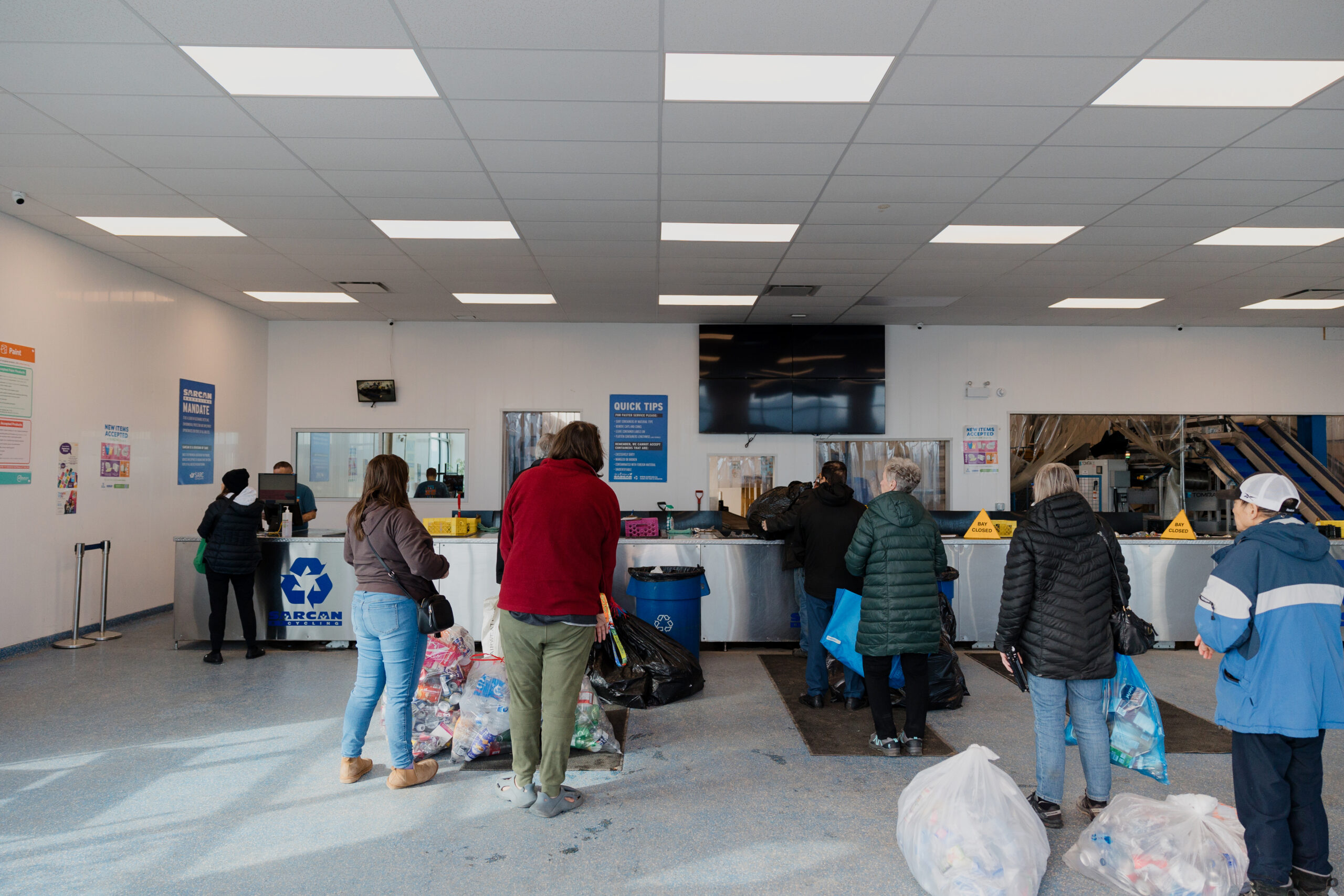
83%
of all beverage containers sold in Saskatchewan were returned at SARCAN.
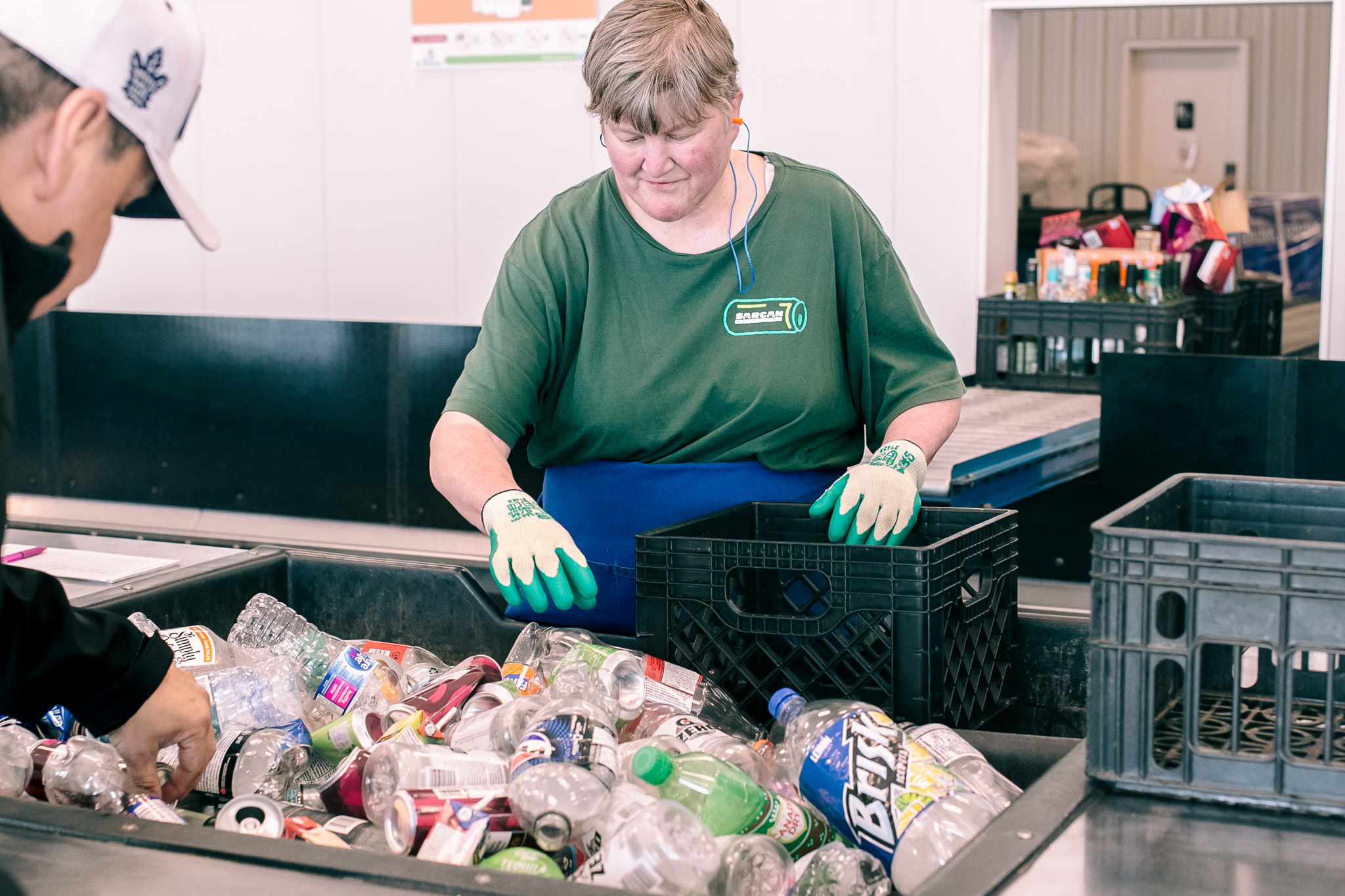
509,969,822
beverage containers returned – the highest total in SARCAN history.
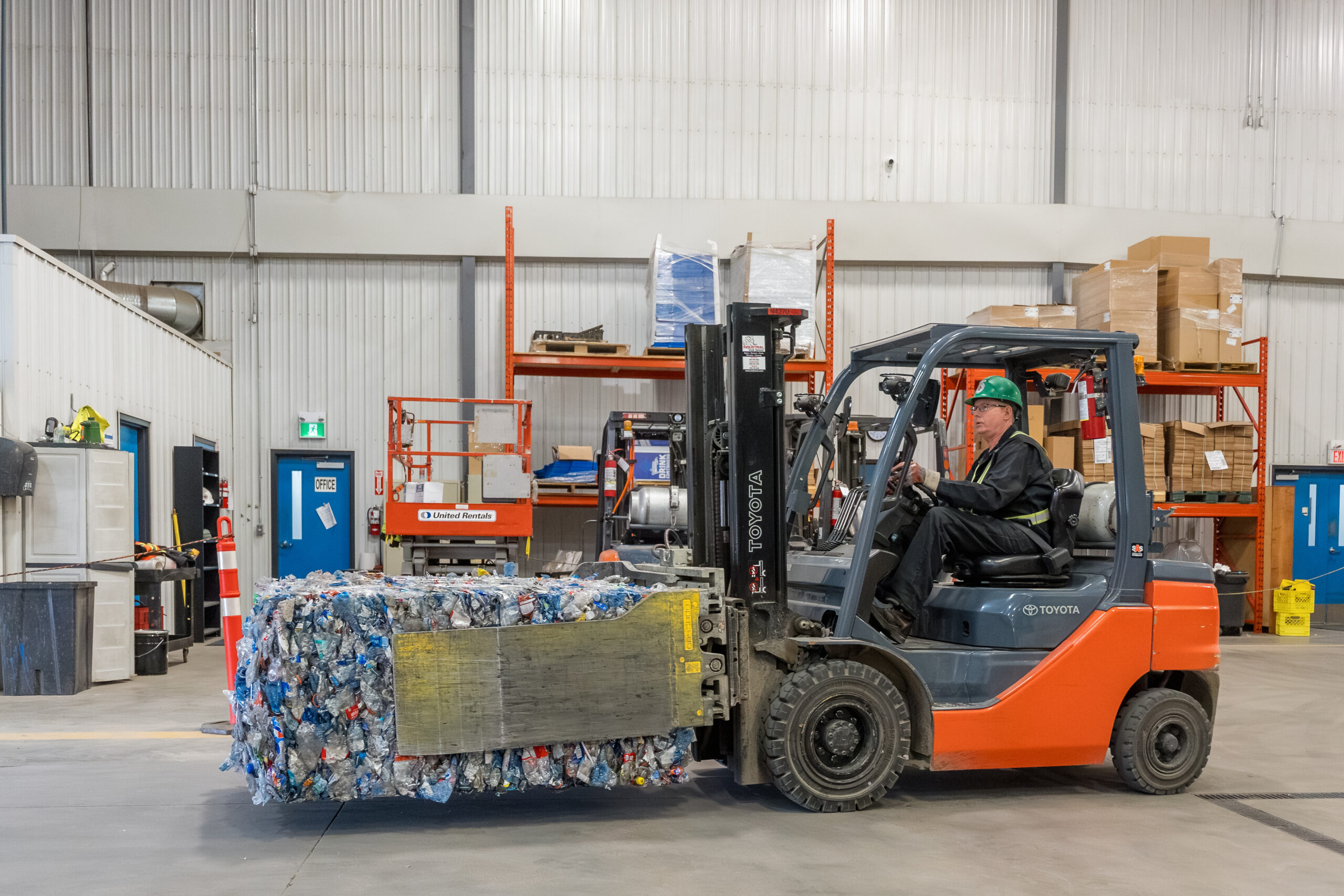
45%
of containers end up in circular production cycles, saving energy & resources.
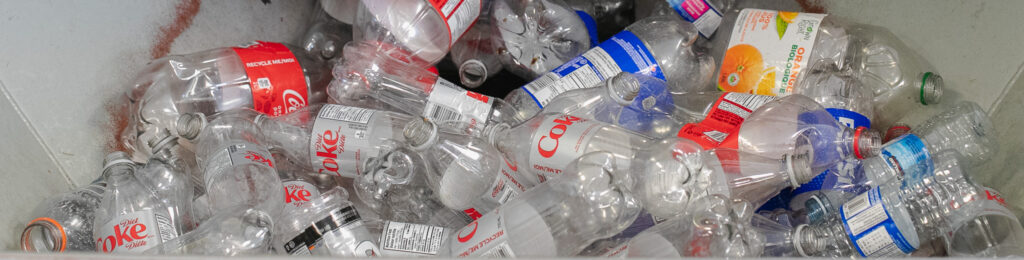
44,894,738 lbs
of valuable resources were diverted from Saskatchewan’s land, air, and waterways – keeping our province clean and beautiful while keeping those resources in use as sustainable feedstock for manufacturers to create new products.
Each resource type is transformed into new products in a slightly different way. Below is how those 44.8 million pounds got a second life.
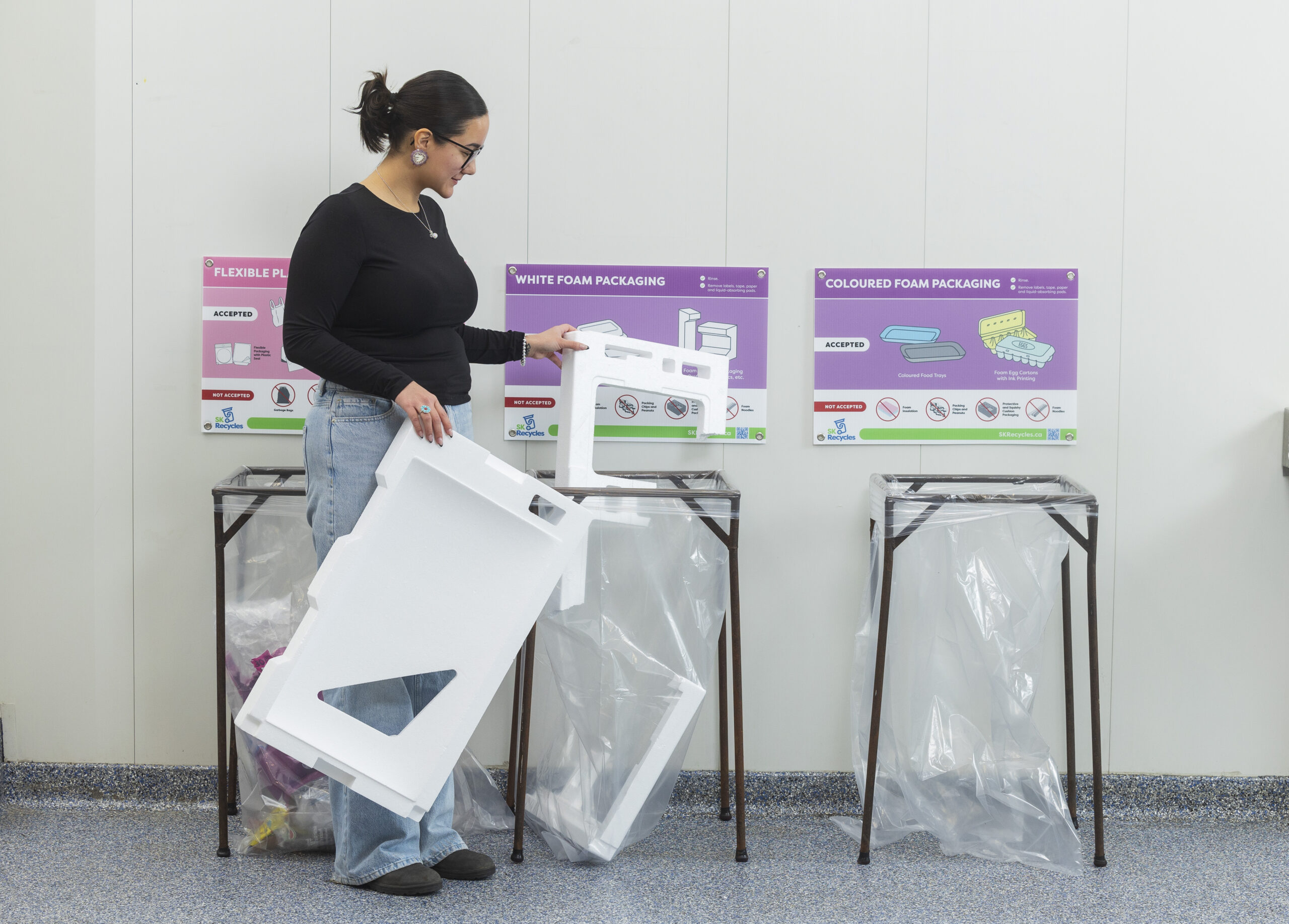
66 thousand pounds
of foam packaging was densified at SARCAN’s processing plant to reduce it’s size before it was shipped to Quebec, where the densified foam is transformed into products such as construction materials and picture frames.
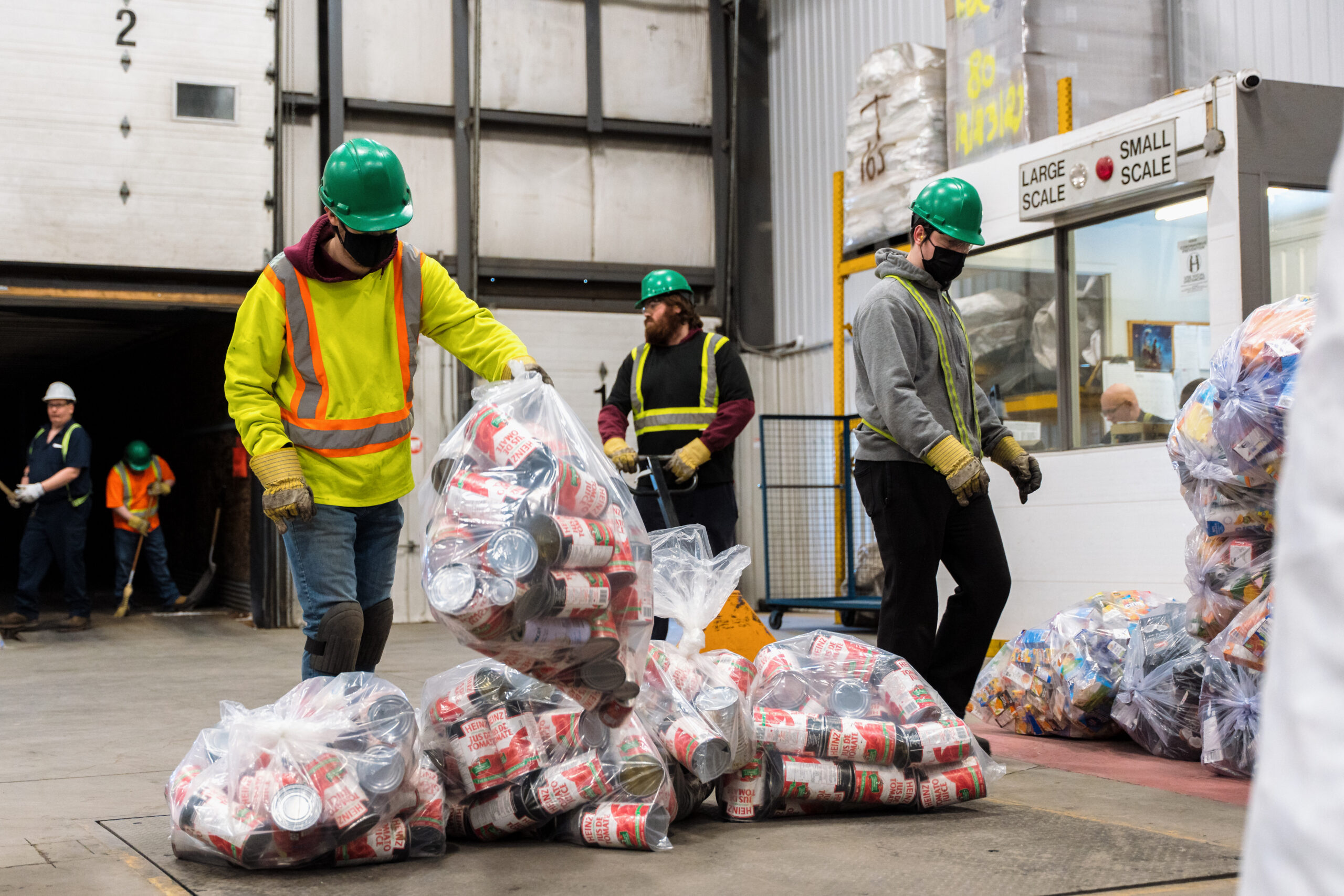
94 thousand pounds
of tin beverage containers (which are actually tin-plated steel!) were shipped to Regina, SK where they are cleaned, shredded, melted and transormed into new products such as construction rebar and piping.
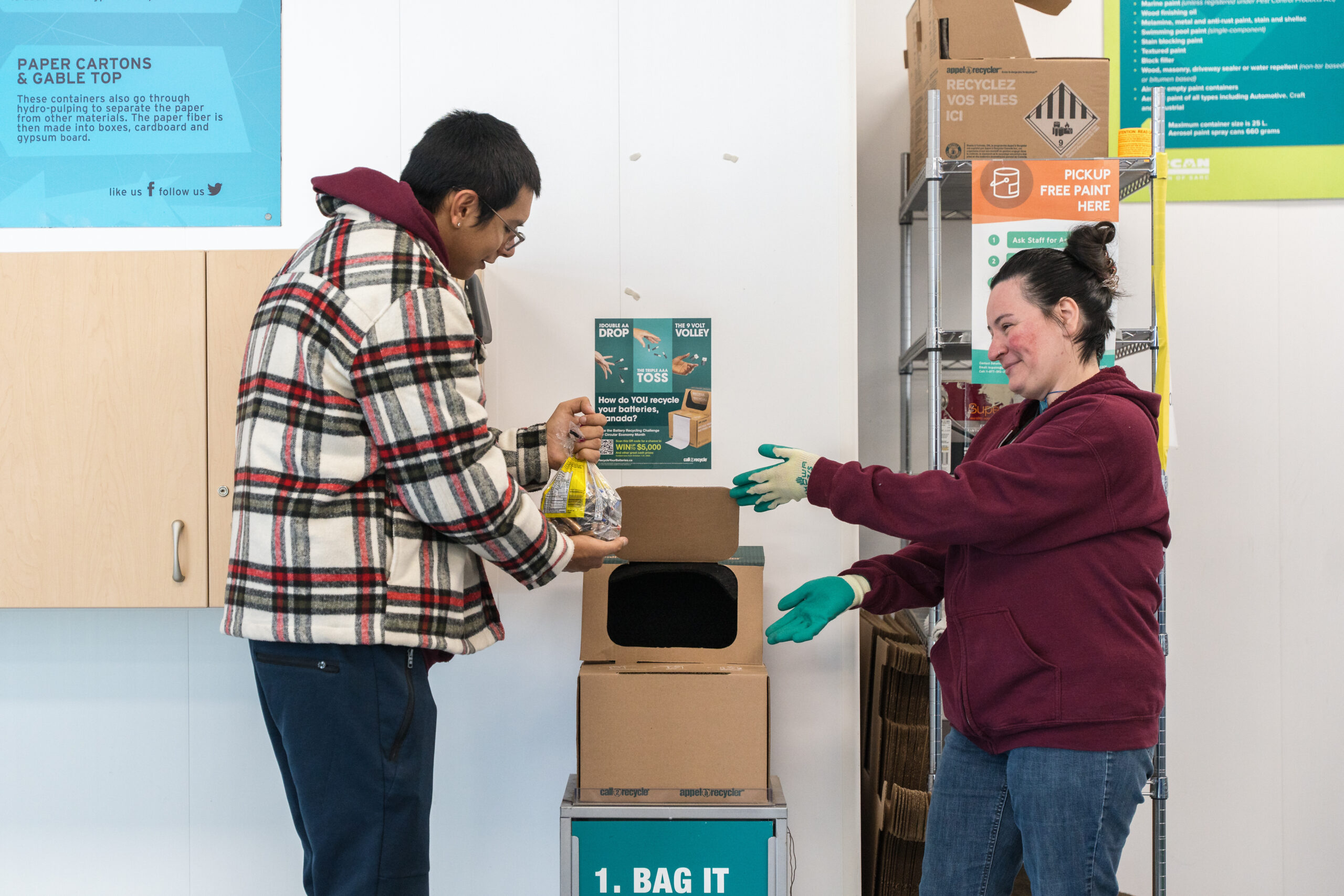
138 thousand pounds
of dead household batteries were shipped to Recycle Your Batteries, Canada! processing facilities where they extract chemicals and metals that can be used to manufacture new products such as silverware, golf clubs, and sunscreen.
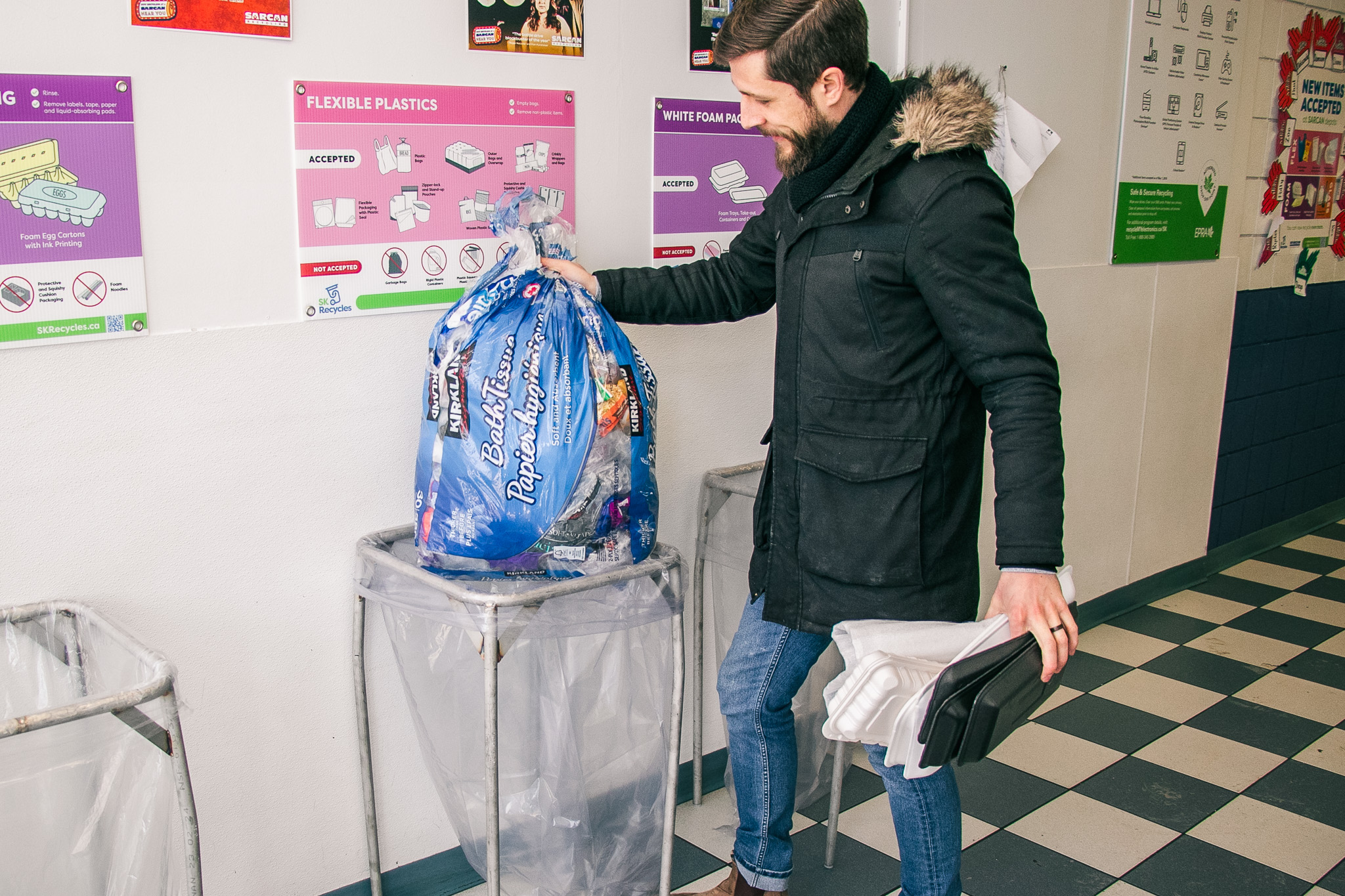
205 thousand pounds
of flexible plastics were sent to Calgary, AB & Delta, BC where they are shredded, washed, melted, and transformed into pellets that manufacturers use to make new products such as plastic lawn furniture and flower pots.
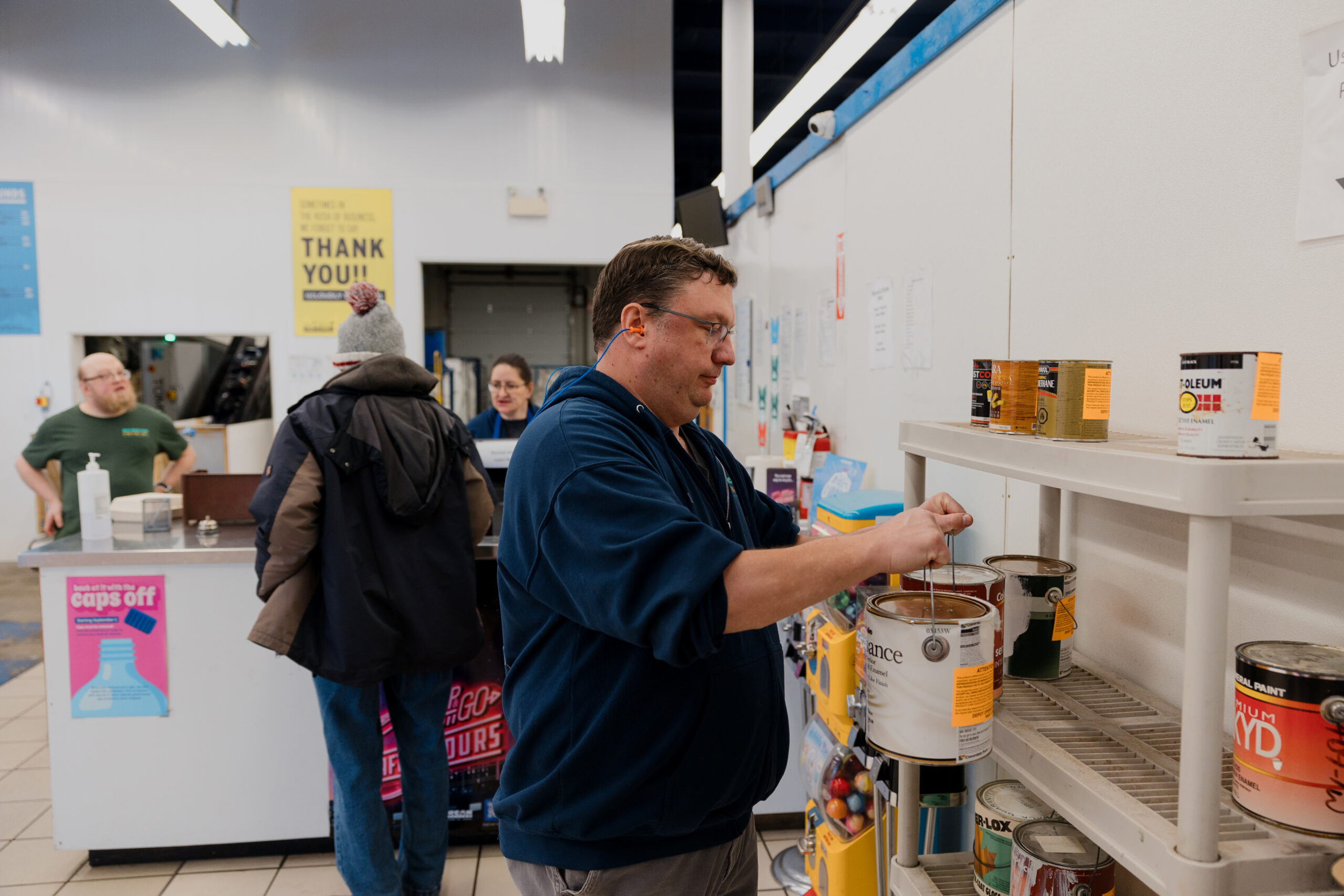
1.1 million pounds
of household paints were shipped to ProductCare processing facilities where it is sorted by type, colour, and quality. High quality paint can go for resale, and lower quality paints are used to create new products such as concrete additive.
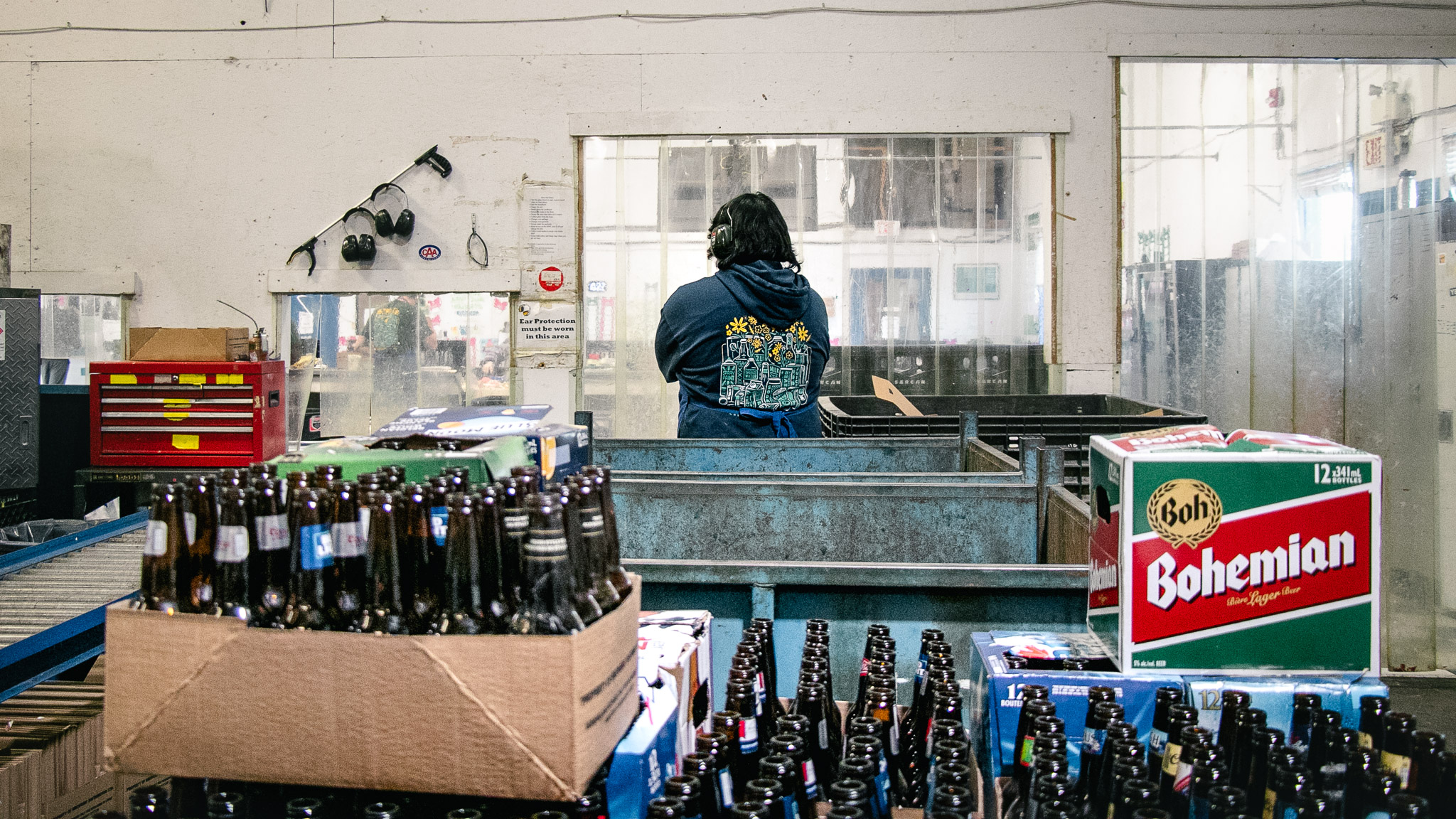
1.3 million pounds
of standard refillable beer bottles were shipped to Brewer’s Distributor Ltd. where they are cleaned, sanitized, and resold to breweries to be refilled. If it can’t be refilled due to defect, it is crushed, melted, and turned into a new bottle!
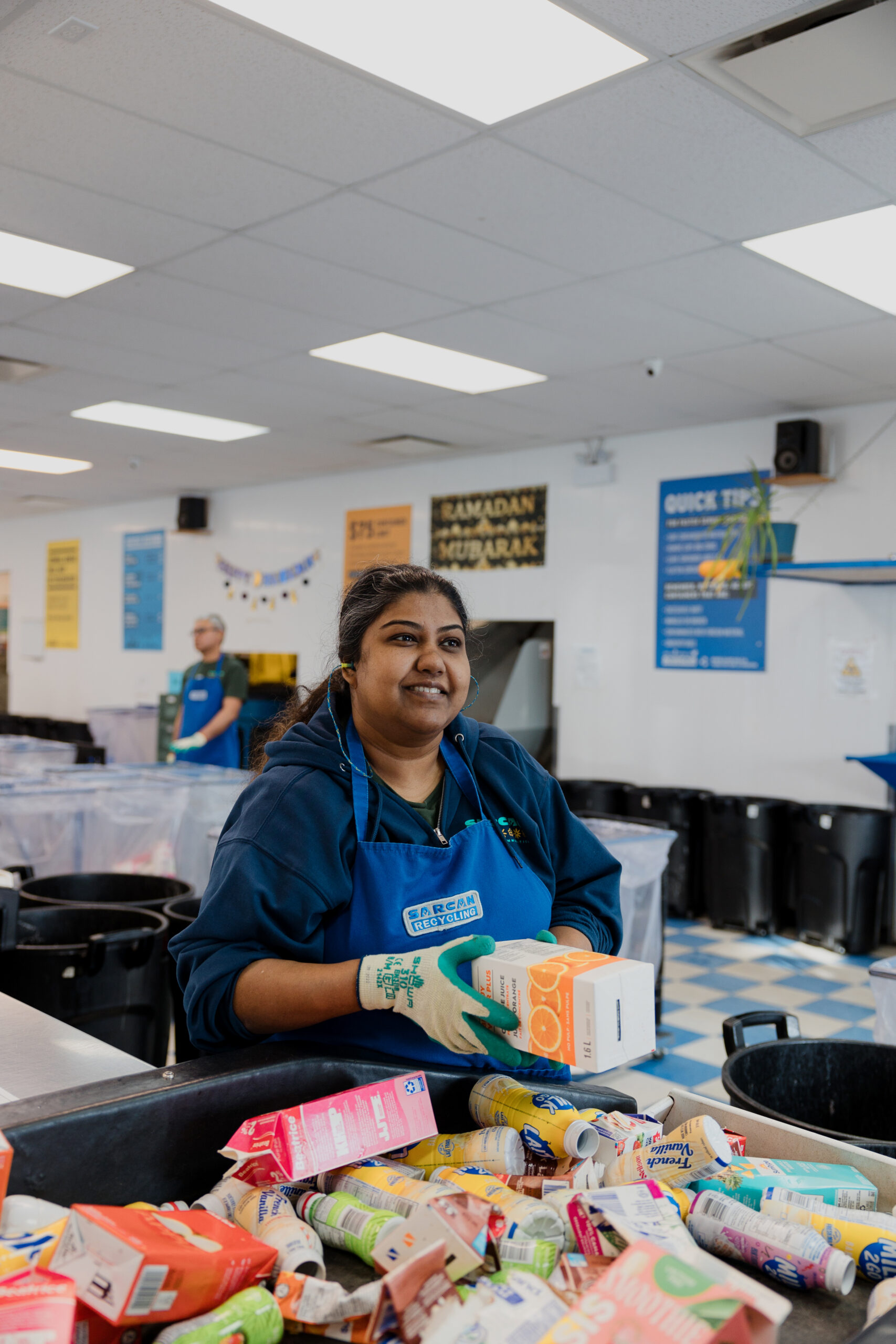
2.2 million pounds
of cartons were shipped to downstream recyclers where they are ‘hydropulped’ – they are blended into a liquid solution, separating layers and removing contamination, resulting in a slurry that is used to make new paper products such as napkins.
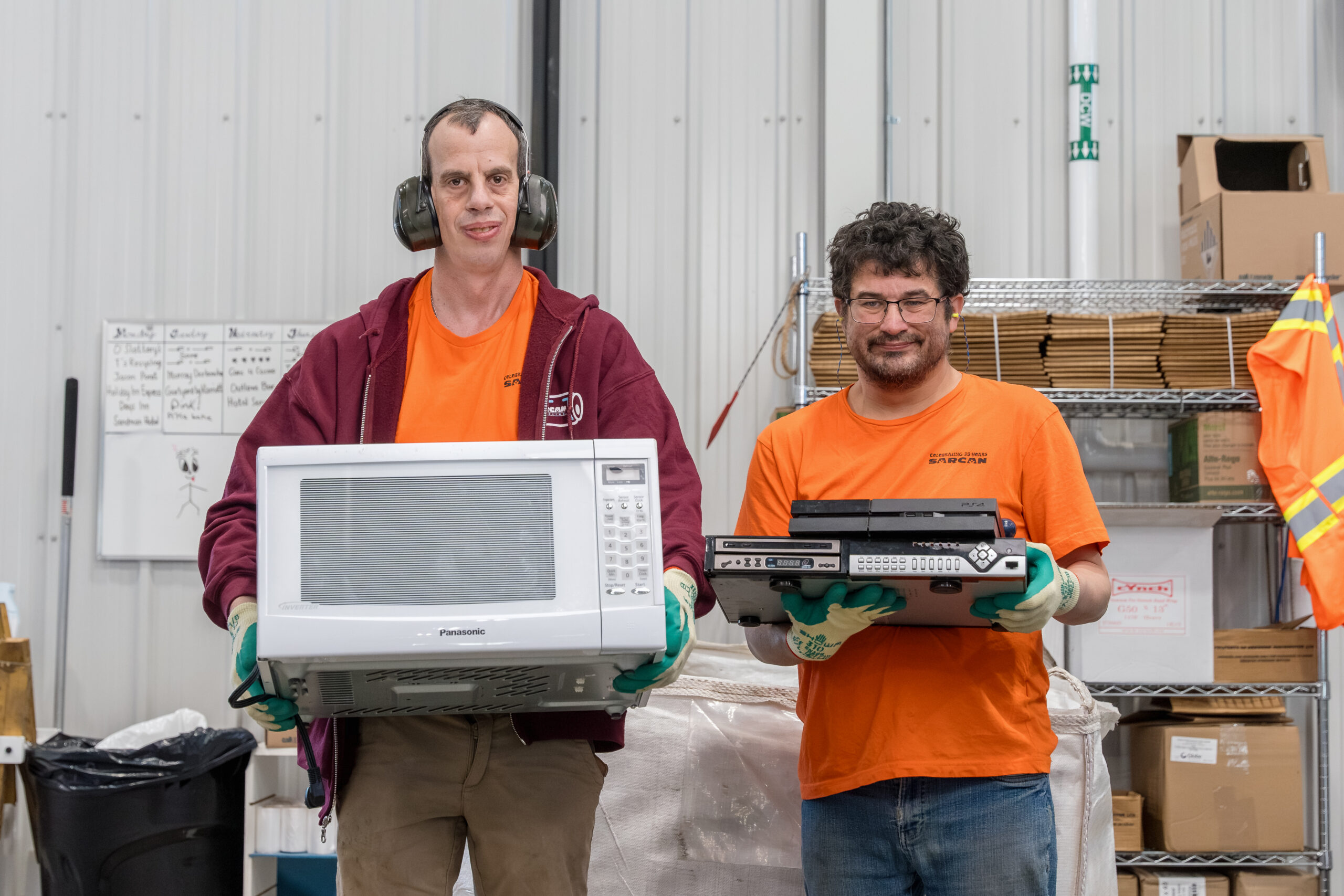
3.1 million pounds
of end-of-life electronics were shipped to EPRA processing facilities where they are dismantled & shredded. Resources (metals, rare-earth metals, plastics, and glass) are sorted and used to make new products such as new electronics.
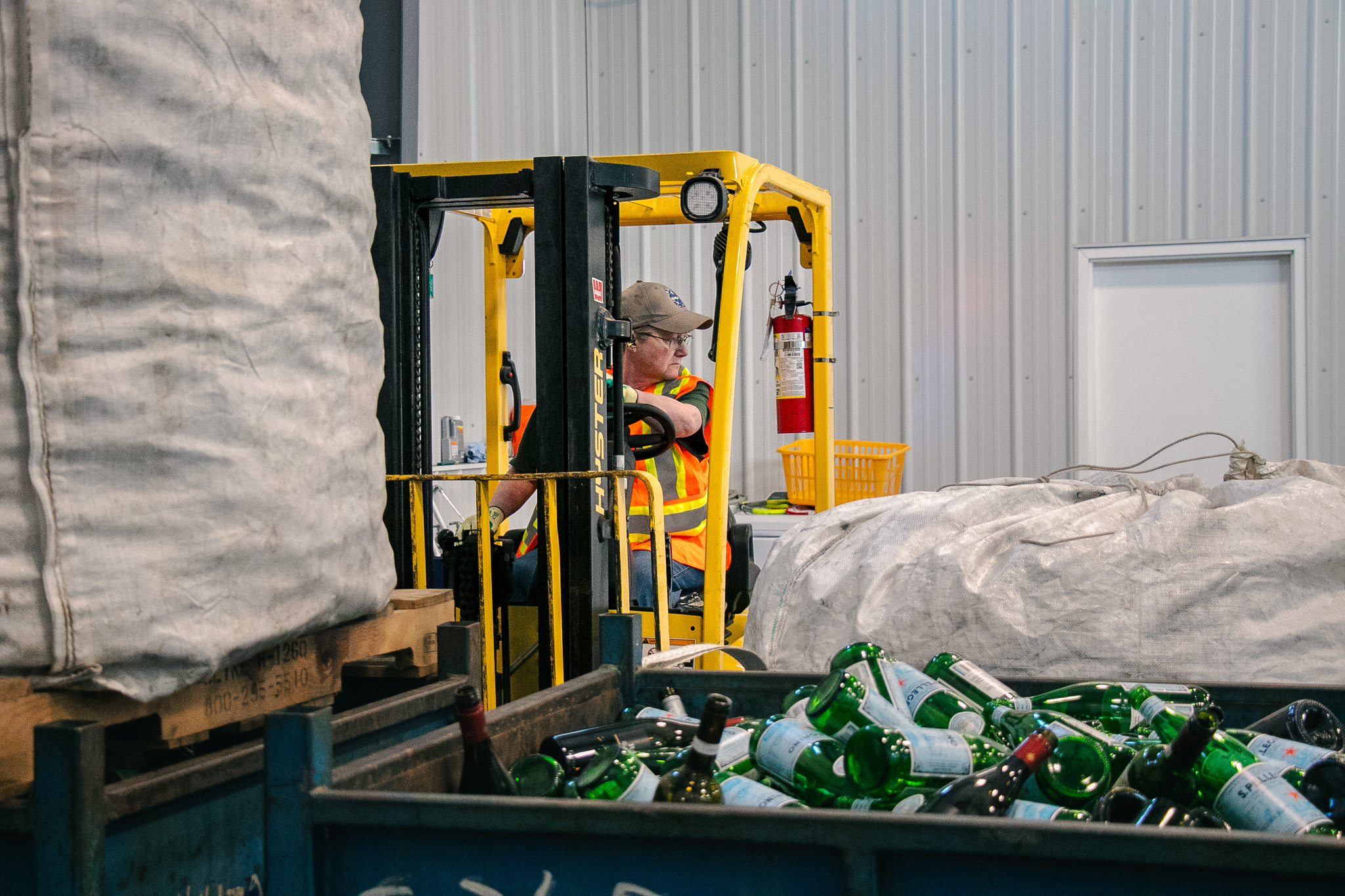
5.6 million pounds
of coloured glass was crushed at SARCAN’s Processing Plants and shipped to Airdrie, AB where it is mixed with minerals, melted, and spun into feathery fibres that are then bonded, cured, and transformed into insulation batts.
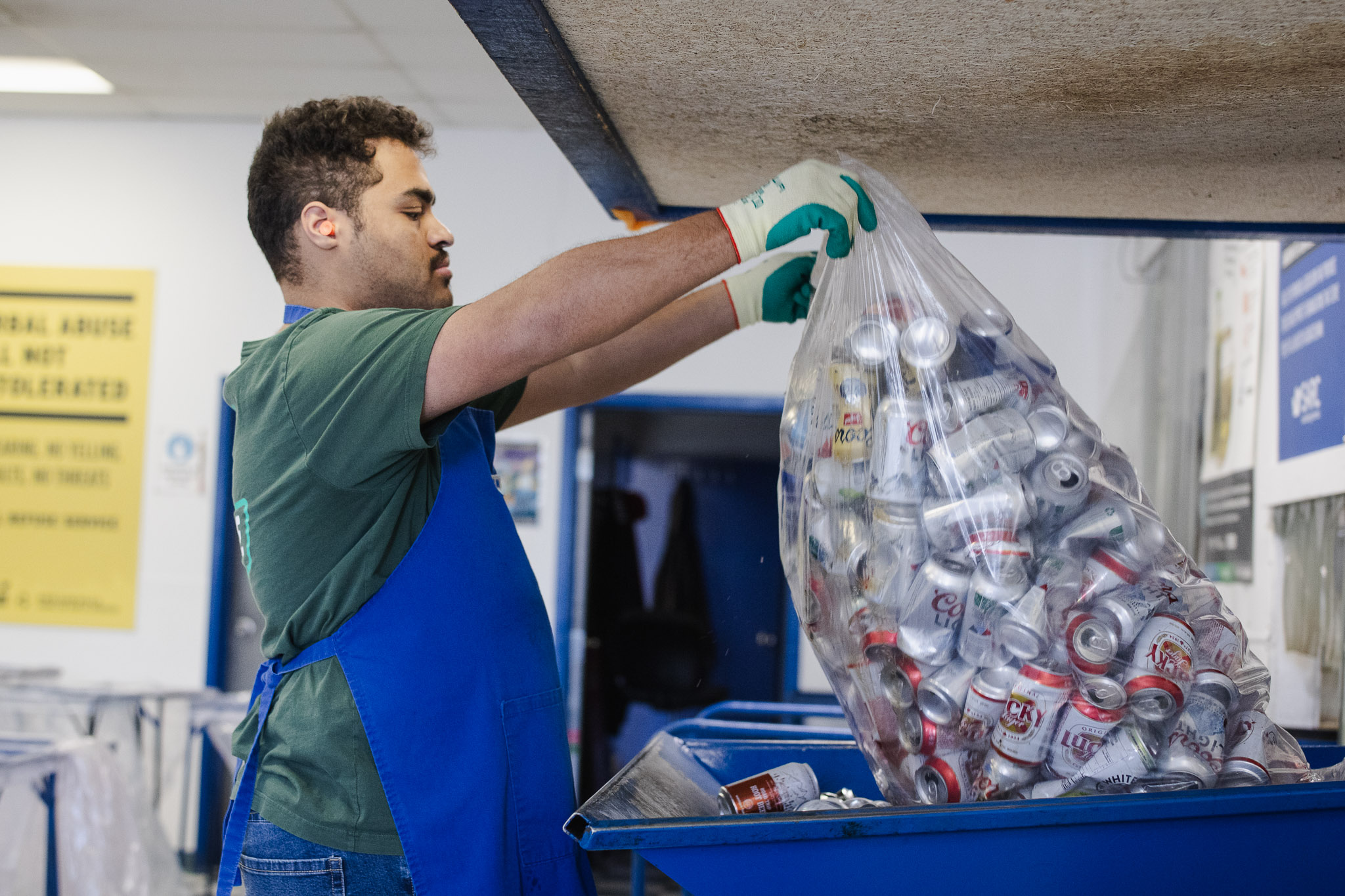
9.2 million pounds
of aluminum containers were shipped to several facilities in the United States where it is melted, poured into molds, rolled into sheeting, and transformed back into an aluminum can that beverage producers use for new beverages.
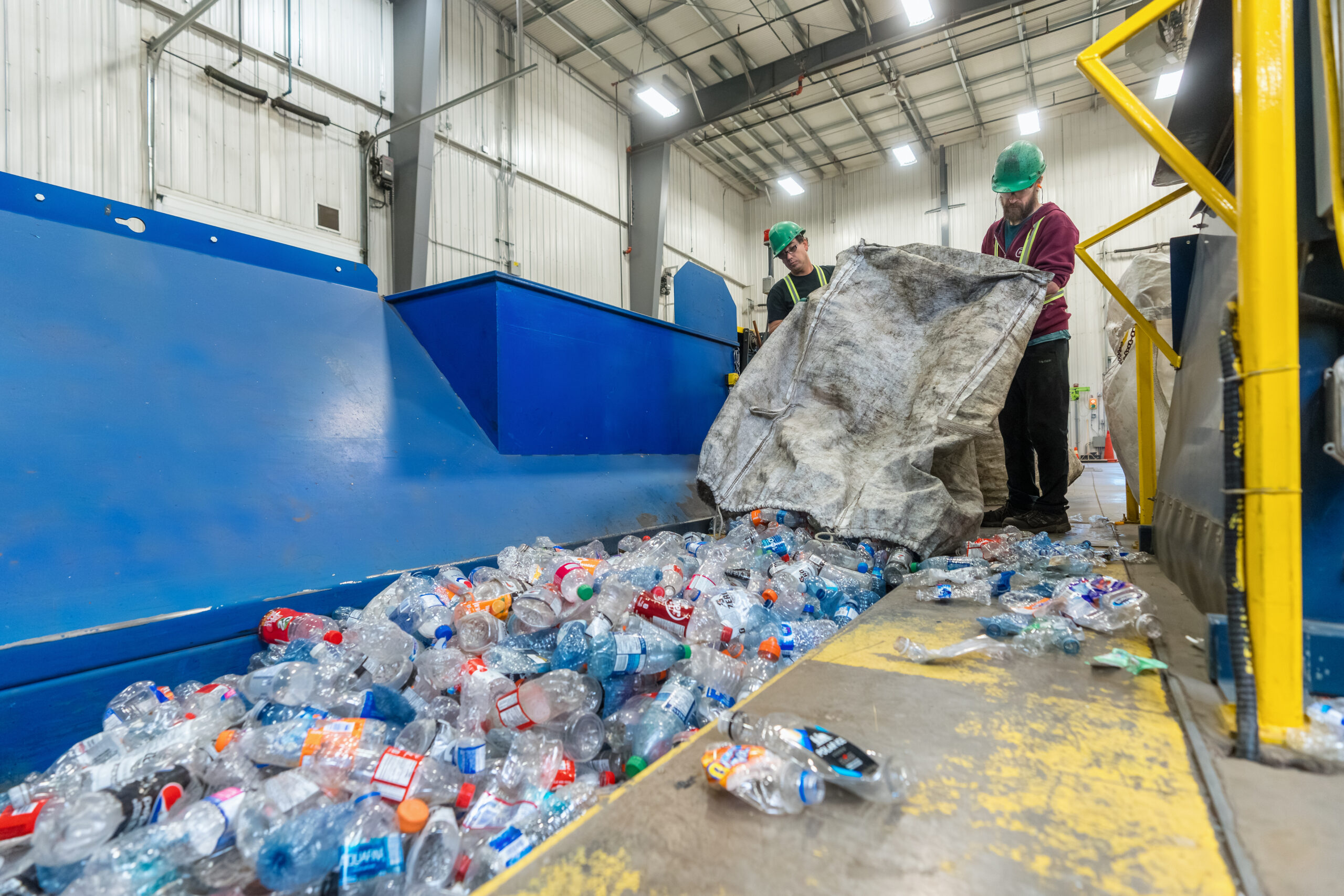
10.4 million pounds
of beverage container plastics were shiped to Calgary, AB and Delta, BC where it is shredded, washed, melted, and transformed into pellets that manufacturers use to make new products such as food & beverage containers and polyester clothing.
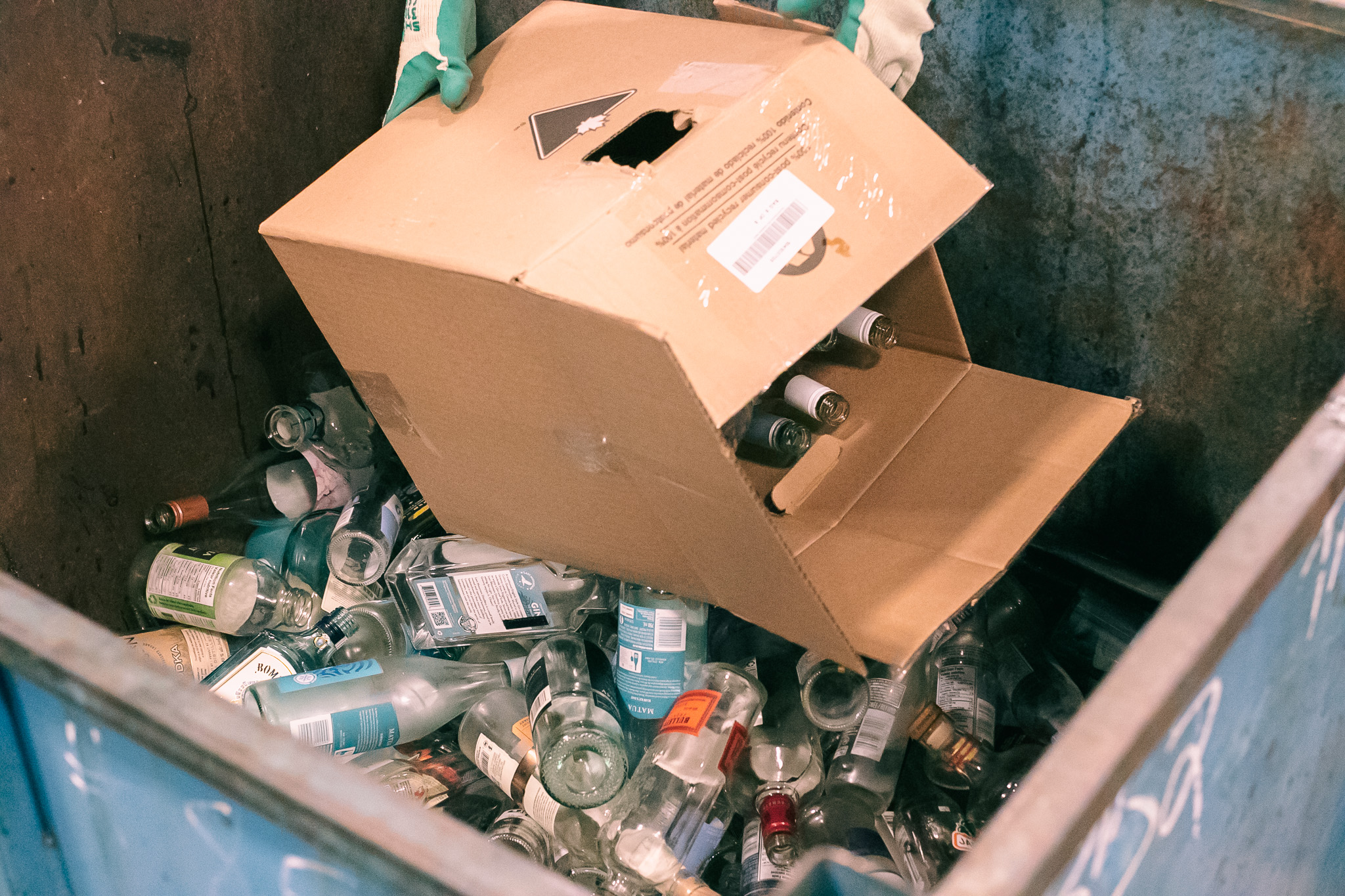
10.5 million pounds
of clear glass was crushed at SARCAN’s Processing Plants and shipped to Moose Jaw, SK where it is melted and transformed into tiny glass beads that are then mixed with highway and road paint to make it reflective at night.